B2C stores and direct sales
Design categories, product pages, variants, search, cart and checkout with mobile usability as a priority. Incorporate promotions, payment methods, shipping and communications that support purchasing and order tracking.
ECOMMERCE IN BARRANQUILLA AND COLOMBIA
We design and develop B2C online stores and B2B portals with Shopify, Magento / Adobe Commerce, VTEX and WooCommerce. Create shopping experiences tailored to your brand and custom integrations that connect catalogs, payments and orders with your business.
DIGITAL COMMERCE WITH BUSINESS PURPOSE
Ecommerce development brings together commercial strategy, design, technology and operations. Define a consistent experience from product discovery to delivery and ongoing customer service.
Design categories, product pages, variants, search, cart and checkout with mobile usability as a priority. Incorporate promotions, payment methods, shipping and communications that support purchasing and order tracking.
Business purchasing with accounts, roles, catalogs and customer-specific pricing. Assess repeat orders, quotes, minimum quantities and commercial terms against the platform and available modules.
Redesign or migrate existing stores with an inventory of products, customers, orders and URLs. Plan redirects, data validation, purchase testing and a transition with clear launch and rollback criteria.
CUSTOM ECOMMERCE INTEGRATIONS
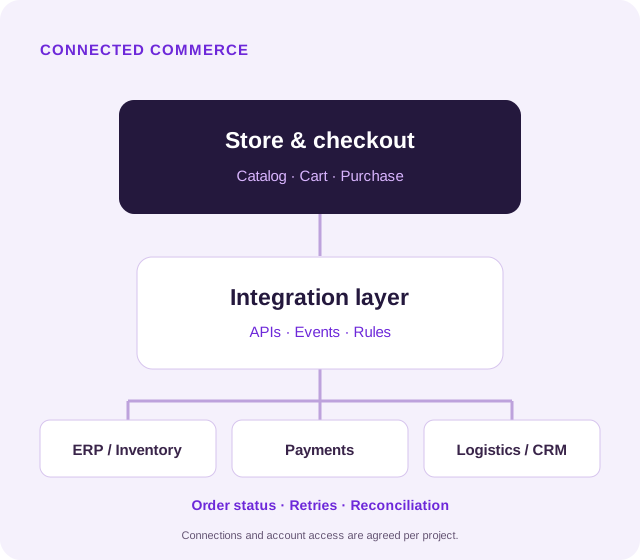
Design how products, prices, customers and orders move between the store and your tools. Establish a system of record for each data set, update rules and operational responsibilities.
Map SKUs, variants, price lists and availability to ERP, PIM or inventory. Define update frequency and how to manage discrepancies or reservations where supported by the system.
Connect payments, invoicing and logistics using verifiable statuses. Test confirmations, retries, duplicate events, cancellations and returns within the agreed scope.
APIs, events and webhooks with limited permissions, protected credentials and operational logs. Document alerts, data reconciliation and version changes to support business continuity.
ECOMMERCE PLATFORMS
Brands seeking managed operations and an integrated commerce ecosystem.
Custom themes, apps and API integrations. Assess Hydrogen and Storefront API for headless experiences, and B2B capabilities by plan. Checkout extensions in information, shipping and payment steps require Shopify Plus.
Operations with customization, multiple stores or complex enterprise requirements.
Theme, module and integration development for Magento Open Source or Adobe Commerce. In Adobe Commerce, assess B2B company accounts, shared catalogs and quotes, plus Live Search and Product Recommendations, subject to licensing and compatibility.
Retail, distribution and projects coordinating channels, sellers and orders.
Design and development with VTEX IO or FastStore based on architecture. Assess Intelligent Search, order system connections and marketplace scenarios. B2B Suite adds organizations, permissions and customer-specific terms; verify modules and storefront compatibility.
Businesses combining WordPress content with a store tailored to their operations.
Custom themes, plugins and connections. Work with block-based cart and checkout, Store API and REST API. Check HPOS order storage compatibility alongside extensions, hosting, security and maintenance.
DESIGN, DEVELOPMENT AND INTEGRATIONS
Category architecture, filters, variants, buying guides and useful product content. Prototypes for priority journeys, responsive design and keyboard navigation review.
Compatible methods and permitted extensions. Validate amounts and statuses; test approvals, declines, cancellations and notifications. Confirm orders using verifiable provider information.
Connections with Odoo, Siigo or other authorized systems. Map products, customers, prices and orders with synchronization and reconciliation rules; define invoicing with the provider and your accounting team.
Shipping rates and rules, tracking and store pickup where feasible. Connect carriers, points of sale and external channels based on APIs, permissions and order and return handling.
CRM connections, transactional communications and agreed automations. Abandoned cart recovery, segmentation or loyalty based on platform capabilities, authorized data and communication preferences.
Staging, permissions, credential management and critical workflow validation. Backups and recovery where applicable, integration logs, documentation and agreed support responsibilities.
CAPABILITIES FOR TODAY'S COMMERCE
Assess catalogs, markets, channels, order volume and integrations to choose between a store with a custom theme and a headless architecture separating the interface from the commerce engine.
Responsive design, accessible navigation, optimized images and Core Web Vitals review. Headless development can use Hydrogen, FastStore or a custom frontend when the flexibility justifies ongoing maintenance.
Attributes, filters, search and recommendations based on the platform. Assess bundles, subscriptions, abandoned cart recovery and loyalty using compatible extensions and the required commercial terms.
Plan languages, currencies, prices, shipping and market-specific catalogs. Connect points of sale, marketplaces or in-store pickup where providers and architecture support consistent operations.
Define product view, cart, checkout and purchase measurement with GA4 or the agreed tool and consent preferences. Review abandonment, searches without results and errors to prioritize improvements.
The proposal identifies licenses, plans, apps, hosting, fees, enabled accounts and support. B2B, checkout, marketplace and AI features depend on platform edition and availability; these are verified before committing to scope.
DEVELOPMENT WITH DEFINED DELIVERABLES
Each stage connects a business decision with a deliverable your team can review. Agree priorities, dependencies and acceptance criteria from the outset.
Review the B2B/B2C model, catalog, markets, systems, budget and ongoing costs. Define initial scope, risks and provider dependencies.
Prototype categories, product pages, cart and checkout. Define data, integrations, SEO structure, content and commercial rules with your team.
Build the store and integrations, import or migrate data, and test purchasing, payments, shipping and failure scenarios. Review access, performance and technical SEO.
Coordinate domains, release, redirects and post-launch validation. Deliver access, documentation and training; agree support, updates and improvements.
ECOMMERCE WITH LOCAL CONTEXT
Work with brands, retailers, manufacturers and distributors in Barranquilla, Atlántico and other Colombian cities that need digital sales connected to their operations.
Assess payment methods available to your account, logistics, currency and invoicing with your providers. Connections with Wompi, PayU, Mercado Pago, Siigo or Odoo depend on compatibility and authorized access; account eligibility and commercial obligations are reviewed with your team.
ECOMMERCE SEO AND GEO
URLs, navigation and internal links; canonicals, sitemaps, redirects and filter controls to manage duplication. Review crawling, rendering, indexability, languages and performance.
Product pages with consistent attributes, variants, images, pricing and availability. Product, Offer and BreadcrumbList on appropriate pages; Merchant Center feeds with shipping and returns where eligible. Markup must reflect visible, current information.
Accurate descriptions, guides, comparisons and specific answers grounded in verifiable information. Review assistant mentions and referrals where observable; Google's AI features are included in Search Console web traffic and do not have a separate GEO report.
Google requires no special files or schema for AI Overviews or AI Mode. Apply SEO foundations and helpful content; indexing, rankings, rich results and AI recommendations depend on the search engine or channel.
Scope can include platform selection, UX/UI design, store development, catalog, checkout, integrations, migration, technical SEO, measurement and launch. The proposal defines deliverables, content, product volume, tests, access, training and support; every store is planned around its operations.
The choice depends on catalog size, B2B or B2C sales, markets, customization, existing systems and ongoing costs. Shopify provides managed operations; Magento / Adobe Commerce offers customization and enterprise options by edition; VTEX supports commerce and marketplace scenarios; WooCommerce connects commerce and WordPress content. Compare these requirements before recommending a platform.
No. They share part of their technical heritage but have different licensing, services and capabilities. Adobe Commerce B2B requires its extension and configuration; Live Search and Product Recommendations require license, service and compatibility checks. Additional capabilities in Magento Open Source can require extensions or custom development.
Yes, through APIs or other authorized mechanisms the systems support. Define the source of each data set, matching rules, permissions and updates. Test the journey from an order to the agreed systems, including retries and reconciliation. Creating an invoice alone does not establish electronic submission or acceptance by the provider.
Yes, with an appropriate scope and architecture. Verify company catalogs, roles, quotes and special pricing against the platform and plan. A marketplace requires seller, order, commission and logistics rules. Headless separates the frontend from the commerce engine and requires checkout, accounts, SEO and integration planning; suitability is assessed per project.
Plan an inventory of URLs, redirects, canonicals, content and data. Validate products, orders and customers that can be transferred, with a cutover and rollback plan. Passwords, apps and payment data can have transfer restrictions. Verification reduces migration risks but does not guarantee retaining every ranking or avoiding traffic fluctuations.
SEO improves crawling, architecture, content and store experience. GEO, or generative engine optimization, aims to make information clear and useful for AI answers: complete product pages, consistent attributes, specific questions, sources and current commercial data. Google's AI features follow SEO fundamentals and require no special markup. Indexing, rankings and assistant recommendations are not guaranteed.
Costs and timing depend on design, catalog, sales rules, migration, integrations and provider testing. After discovery, propose stages and a budget separating development from ongoing costs. Agree account ownership, custom code access, licenses, training and maintenance responsibilities so your team can manage operations.

YOUR NEXT STAGE IN DIGITAL COMMERCE
A new store, a migration or custom integrations. Tell us what you sell, who you serve and how you operate so we can prepare a professional proposal.
Request an ecommerce quoteYou can also reach us through contact