SEO IN BARRANQUILLA AND COLOMBIA

Get found. Give people a reason to choose you.

Your next customer is already looking for a solution. We work on SEO for businesses in Barranquilla and across Colombia, connecting that search with useful pages, a solid website and a clear path to contact.

  • Evidence-led priorities
  • Content with a purpose
  • Results in context
Illustrative strategy · No client rankings or metrics.

SEARCHES THAT MATTER TO YOUR BUSINESS

Beyond visits: a strategy for the right demand.

SEO helps search engines discover and understand your website and helps people find a relevant answer. Start with your services, market and intended action. The work follows the actual state of your website, rather than the same checklist for every business.

01

Audit and roadmap

For a new website, stalled visibility or a traffic decline. Review indexing, structure, content and available data; separate confirmed problems from hypotheses and prioritize by expected impact, effort and dependencies.

  • Diagnosis
  • Priorities
  • Baseline
Understand what to fix and why.
02

Local and service SEO

For businesses seeking enquiries in Barranquilla, Atlántico or a national market. Connect service pages, business information and, where appropriate, Google Business Profile with customers’ real needs and locations.

  • Barranquilla
  • Colombia
  • Commercial intent
Align your service with its market.
03

Content and ongoing improvement

For an organic presence you can maintain. Plan pages, guides and improvements to existing content, coordinate implementation and review search signals and commercial opportunities to decide the next step.

  • Useful content
  • Implementation
  • Review
A strategy that learns and adapts.
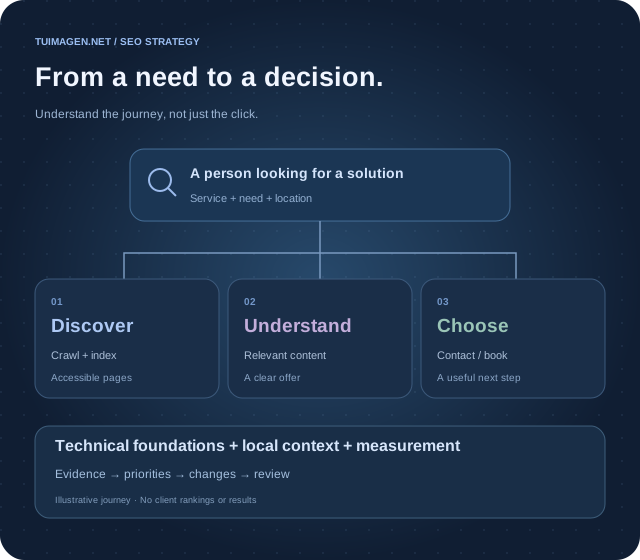
Conceptual SEO diagram: a need connects to discovery and indexing, relevant content and an action; technical foundations, local context and measurement support the journey.
Illustrative journey · Does not represent rankings or client results.

FROM SEARCH TO DECISION

Visibility starts the journey. The whole experience matters.

A search leads to a page, and that page should help someone decide. Review the complete journey: what the person needs, what the search engine understands and what happens when someone wants to enquire, book or buy.

A recognizable need

Identify the problem each service solves, how your audience searches for it and which questions arise before purchasing. This avoids attracting visits to pages that do not address the intended need.

A page that helps people choose

Organize scope, process, selection criteria, available evidence and next steps. Provide enough information to support a decision, with understandable titles, links and structure.

An action you can evaluate

Agree on what counts as an opportunity: a valid enquiry, a booking or a purchase. Separate button clicks from received contacts and, when commercial data is available, assess their quality too.

WHAT WE REVIEW AND WHAT YOU RECEIVE

A diagnosis that leads to decisions, not a list of alerts.

Each area answers a different question. Review depth follows site size, platform, objectives and data access. These are examples of work and deliverables; the specific proposal defines what is included.
01

Can your pages be discovered and indexed?

A published URL is not necessarily indexed. Review which pages should appear, what can be crawled and the signals search engines receive. Confirm findings on representative URLs before applying changes across an entire template.

  • HTTP statuses, internal links and orphan pages.
  • Consistent robots controls, noindex, canonicals and sitemap.
  • Content and links accessible when JavaScript renders.
POSSIBLE DELIVERABLEBlocker inventory and URLs with validation actions.
02

Does each intent have a suitable page?

Group queries by need and buying journey, beyond search volume. Review which page should address each group and whether several URLs serve the same purpose. Decide when to improve, create or consolidate content.

  • Services, categories and questions before purchasing.
  • Map of queries, intent and destination pages.
  • Links between related pages with descriptive text.
POSSIBLE DELIVERABLEPage map and content priorities.
03

Does your content support a decision?

A service page should explain what you solve, for whom, what is included and how you work. Add business-specific detail, verifiable examples and answers to objections. Edit titles, headings, descriptions and images for clarity.

  • Visible scope, conditions and next steps.
  • Real evidence, sources and review by someone who knows the service.
  • Update or remove outdated information.
POSSIBLE DELIVERABLEWriting briefs and improvements to agreed pages.
04

Does the mobile experience sustain interest?

Review loading, responsiveness and stability alongside navigation, readability and forms. Performance work should address observed friction. Compare controlled tests with real-user data when a sample is available.

  • Images, fonts, scripts and resources delaying loading.
  • Interactions and layout shifts that interrupt use.
  • Entry and contact pages on mobile devices.
POSSIBLE DELIVERABLEExperience and performance tasks with checks.
05

Can customers explore your catalogue clearly?

For stores, focus on categories and product pages that support purchasing. Review filters, variants, pagination and URLs to avoid unnecessary routes or contradictory signals. Decisions follow the catalogue and platform behavior.

  • Useful categories, descriptions and product links.
  • Consistent availability, variants and product information.
  • Applicable markup checked against visible content.
POSSIBLE DELIVERABLECategory, product-page and catalogue navigation plan.
06

Does a website change preserve the journey?

Before migration, inventory URLs and content that remains useful. Define destinations and redirects, review links and language/canonical signals, and coordinate release with developers. Afterwards, observe errors and traffic changes.

  • Map of previous URLs and equivalent destinations.
  • Redirect, sitemap and measurement validation.
  • Follow-up with named owners and an issue log.
POSSIBLE DELIVERABLEMigration plan and verification checklist.

AN EXAMPLE THAT SHOWS THE DIFFERENCE

The query changes. So should the answer.

Imagine an air-conditioning company. These searches represent different needs; they are examples rather than demand data or a client’s queries. Research validates which ones make sense for the business.

Swipe the table to see every column.

The query changes. So should the answer.
Illustrative searchWhat the person needsA page that could help
“air conditioning maintenance in Barranquilla”Find a provider serving their area.A service page with real coverage, scope, process and a way to request assistance.
“how much does air conditioning maintenance cost”Understand budget and variables before deciding.An explanation of price factors, what is included and how to request a quote.
“why is my air conditioner not cooling”Identify a problem and understand the next step.A specialist-reviewed guide, diagnostic limits and when to seek assistance.

A long page adds value when it resolves real questions. Repeating a phrase, adding cities without context or publishing nearly identical text cannot replace a useful answer.

TOOLS THAT SUPPORT THE DIAGNOSIS

Search, experience and content data in one conversation.

Choose tools around your platform and authorized access. An automated report may highlight a symptom; confirm the issue, its scope and the correction before turning it into a task.

Google Search Console

Queries, pages and indexing signals help identify where the site appears and which URLs need review. Segment by country, device and comparable periods, separating brand searches from other needs.

  • Queries
  • Indexing
  • URL Inspection

Crawling and technical review

A crawler such as Screaming Frog and site inspection help review links, HTTP statuses, metadata and duplicates. Check rendering and accessible content in WordPress, Shopify or JavaScript applications as the project requires.

  • Architecture
  • HTML and JavaScript
  • Redirects

Experience and performance

PageSpeed Insights and Lighthouse support diagnosis; real-user data, when available, shows the experience in use. Review LCP, INP and CLS for loading, responsiveness and stability, without confusing a lab score with a ranking guarantee.

  • Core Web Vitals
  • Mobile
  • Field data

Analytics and commercial follow-up

With GA4 or an agreed solution, define events and verify collection. If scope allows, connect valid enquiries with CRM or commercial reports. Review access, consent and attribution before interpreting figures.

  • Events
  • Valid enquiries
  • Commercial quality

Licenses, account access, development tasks, content production and review frequency are specified in the proposal. No tool, extension or score alone guarantees results.

A PLAN YOUR TEAM CAN FOLLOW

Diagnose. Prioritize. Implement. Learn.

Agree on a baseline and a scope you can review. Work follows actual blockers, commercial opportunity and the people who can publish or modify the website.

  1. 01

    Understand and measure

    Review your offer, audience, territory, site history and available data. Document measurement limitations and business objectives before comparing results.

    DELIVERABLEAgreed baseline and objectives
  2. 02

    Prioritize and plan

    Turn findings into tasks with a reason, owner and validation criteria. Prepare the page map and content to create, improve or consolidate.

    DELIVERABLERoadmap and content plan
  3. 03

    Implement and check

    Coordinate technical and editorial changes. Verify published pages, links, metadata, redirects and measurement within scope, and keep a change log.

    DELIVERABLEPublished and checked changes
  4. 04

    Review and adjust

    Read trends, enquiries and completed tasks across comparable periods. Explain what is known, what remains a hypothesis and which adjustments deserve priority.

    DELIVERABLEReport and next work cycle

LOCAL CONTEXT. SPECIFIC CONTENT.

SEO in Barranquilla. A strategy for Colombia.

Support businesses in Barranquilla and Atlántico seeking nearby customers, and businesses offering services or products across Colombia.

Coverage should be reflected in verifiable information: available services, areas served, working arrangements and relevant purchasing conditions. For professional services, commerce, logistics or B2B businesses, study sector demand and the buying journey. A local page deserves to exist when it explains a real offer for that location; changing only the city name adds little value for the visitor.

  • Barranquilla
  • Atlántico
  • Colombian Caribbean
  • Across Colombia

LOCAL SEO IN PRACTICE

Your location should explain a real offer.

Maps results and the website’s organic results have different journeys. Coordinate them while respecting each channel’s capabilities and how you serve customers.

A profile that represents your business

For eligible businesses, review Google Business Profile: category, services, hours, contact details, photos and location or service area. The profile and website should describe the same business. Do not invent offices to cover more cities.

Google explains local ranking through relevance, distance and prominence. Editing a profile does not remove distance.

Coverage that supports purchasing

In Barranquilla or any Colombian market, a page should explain where you operate, what is available there and how service is coordinated. For a national offer, review delivery, remote assistance or availability conditions that actually affect buying.

City pages need useful, verifiable differences rather than a template that only changes the location name.

A reputation you can maintain

Organize consistent information and support requests for authentic reviews in line with platform policies. For the website, pursue editorial mentions and resources others may recommend for their usefulness. Assess link origins and relevance.

Do not sell link packages for ranking manipulation, fabricated reviews or an “authority” score as a sales guarantee.

MEASURE TO CHOOSE THE NEXT ACTION

A rise in traffic does not tell the whole story.

A baseline enables before-and-after comparison. Read signals by page, query, device and market, across comparable periods and with published changes in view. These are interpretation criteria rather than promised results.

Swipe the table to see every column.

A rise in traffic does not tell the whole story.
SignalWhat it can tell youWhat to check
Indexing and page statusWhether important URLs can participate in search.The right pages, accessible content and no accidental blockers.
Impressions and queriesWhich needs the site appears for and how exposure changes.Brand versus non-brand, country, device, seasonality and query mix.
Clicks and CTRHow many visits arrive from recorded appearances.Intent, title, result type and position; isolated CTR does not explain causation.
Valid enquiriesWhether visits generate received contacts the team can handle.Verified events, duplicates, spam and the difference between a WhatsApp click and a real conversation.
Opportunities and salesWhether the channel contributes commercially when follow-up data exists.Contact quality, CRM records, attribution and time from enquiry to close.

Average position is a contextual average, not a fixed ranking everyone sees. Search Console and site analytics measure different things, so their numbers do not have to match. Explain data gaps before drawing conclusions.

What a report should help you understand

Agree on frequency and format. A useful report explains the work and supports a decision alongside its metrics.

  1. 01What was published or corrected, and on which URLs.
  2. 02Which tasks remain and who they depend on.
  3. 03What changed against a comparable baseline.
  4. 04Which enquiries or commercial results can be verified.
  5. 05Which interpretation has evidence and which remains a hypothesis.
  6. 06What happens next, with a reason and an owner.

AI SEARCH AND TRUST

Search evolves. Useful information remains the foundation.

Generated answers change how information is presented. Work on a clear offer and reliable sources, using concrete criteria without turning a new technology into a promise of visibility.

SEO for Google’s AI features

SEO foundations still apply in AI Overviews and AI Mode. Google does not require a special file or exclusive schema to appear. Focus on accessible pages, clear content and consistent information. Inclusion and citations remain the system’s decision.

AI as editorial assistance, with review

It can help organize questions, structure drafts or identify gaps. Service information, claims and examples need human review and sources. Do not replace business knowledge with mass publication that adds no original contribution.

Measurement with explicit limits

Google includes traffic from its AI features in general web search data in Search Console. Attribution and sources can vary for other assistants. Spot checks of answers are observations, rather than a guaranteed share of appearances.

QUESTIONS FOR A WELL-INFORMED DECISION

Understand the work before investing.

Tell us about your market and website
What does an SEO service include?

It may include an audit, demand research, page mapping, technical improvements, content, local SEO and monitoring. The proposal specifies URLs or templates, deliverables, responsibilities and frequency. Distinguish recommendations from implementation: a diagnosis is not the same as published changes and does not automatically include a complete redesign.

Do you work on SEO in Barranquilla and other Colombian cities?

Yes. Work with businesses in Barranquilla and Atlántico and coordinate remotely across Colombia. The focus changes with where you can actually serve customers: a store with in-person visits, a service-area business and a company selling nationally need different information and priorities.

Can you guarantee the first position on Google?

No. Rankings depend on search systems, competition, query context and many factors outside an agency’s control. Agree on tasks, validations, deliverables and transparent measurement. If a proposal promises first place for any search, ask how that result is defined and demonstrated.

How long does SEO take to show results?

There is no universal timeline. A technical blocker, a new page and a competitive market move at different speeds; search engines need to discover and process changes. Plan reviews that allow enough time to observe trends. Site history, implementation, competition and seasonality matter. Avoid a fixed ranking date before diagnosis.

What determines the price?

Page count and types, technical condition, market, content production, access and development support. A one-off audit and ongoing support have different scopes. Quote specific priorities and clarify included tools, writing, development and reviews, alongside dependencies on your team.

Should I choose SEO or Google advertising?

They meet different needs. Advertising can activate paid visibility with budget and campaign controls; SEO works on organic presence through implementation and ongoing review. They can complement each other. SEO is not cost-free traffic: it needs investment in content, technology and maintenance, with return assessed through opportunities and sales when measurable.

Do I need a Google Business Profile?

Review it if your business meets Google’s requirements and serves customers in an eligible way. A website alone is not enough to create a valid profile. Categories, details, opening hours, location or service area must represent the real business. Distance affects local results, so the same profile will not appear equally for everyone.

Do I need to publish articles every week?

Frequency follows your capacity to add useful information and keep it updated. Improving a service page may address a more important need than starting a blog. Before publishing, assess intent, existing content and the new piece’s specific contribution. Volume and word count are not substitutes for quality.

Can you work with WordPress, Shopify or a JavaScript website?

Yes, subject to platform capabilities and available permissions. Template, plugin, theme or rendering changes may require separate development. Check both the content search engines receive and the visitor experience. An SEO plugin can assist certain tasks, but does not replace strategy or validation.

What if I am redesigning my site or changing domain?

Plan before publishing. Inventory pages and destinations, review redirects, links, canonicals, sitemap and measurement, then check the site after the change. A migration can cause fluctuations; agree on monitoring and responsibilities. Do not promise to preserve every ranking or recover any decline within a fixed period.

Does SEO also help with AI search?

SEO foundations remain relevant for Google features such as AI Overviews and AI Mode. Work on understandable content, verifiable information and accessible pages; inclusion or citation cannot be guaranteed. Other assistants have different sources and controls. Agree on the platforms to observe and explain measurement limitations.

Will my business retain access to accounts, content and reports?

Define ownership, access and handover in the proposal. You should be able to consult accounts you administer, the change history, delivered content and roadmap. Agree on minimum permissions, internal owners and maintenance after the project. Passwords do not need to be shared through informal channels.

START WITH YOUR ACTUAL SITUATION

What should your next customers find?

Share your website, services and target market. Define what to review, what to improve and how to assess the work with your business in mind.

Let's talk about your SEOOr reach us through contact

Necessary preferences
Local storage remembers this privacy choice. It does not track you across websites.

Optional measurement and advertising are currently disabled.

Cookie policy · Privacy policy